
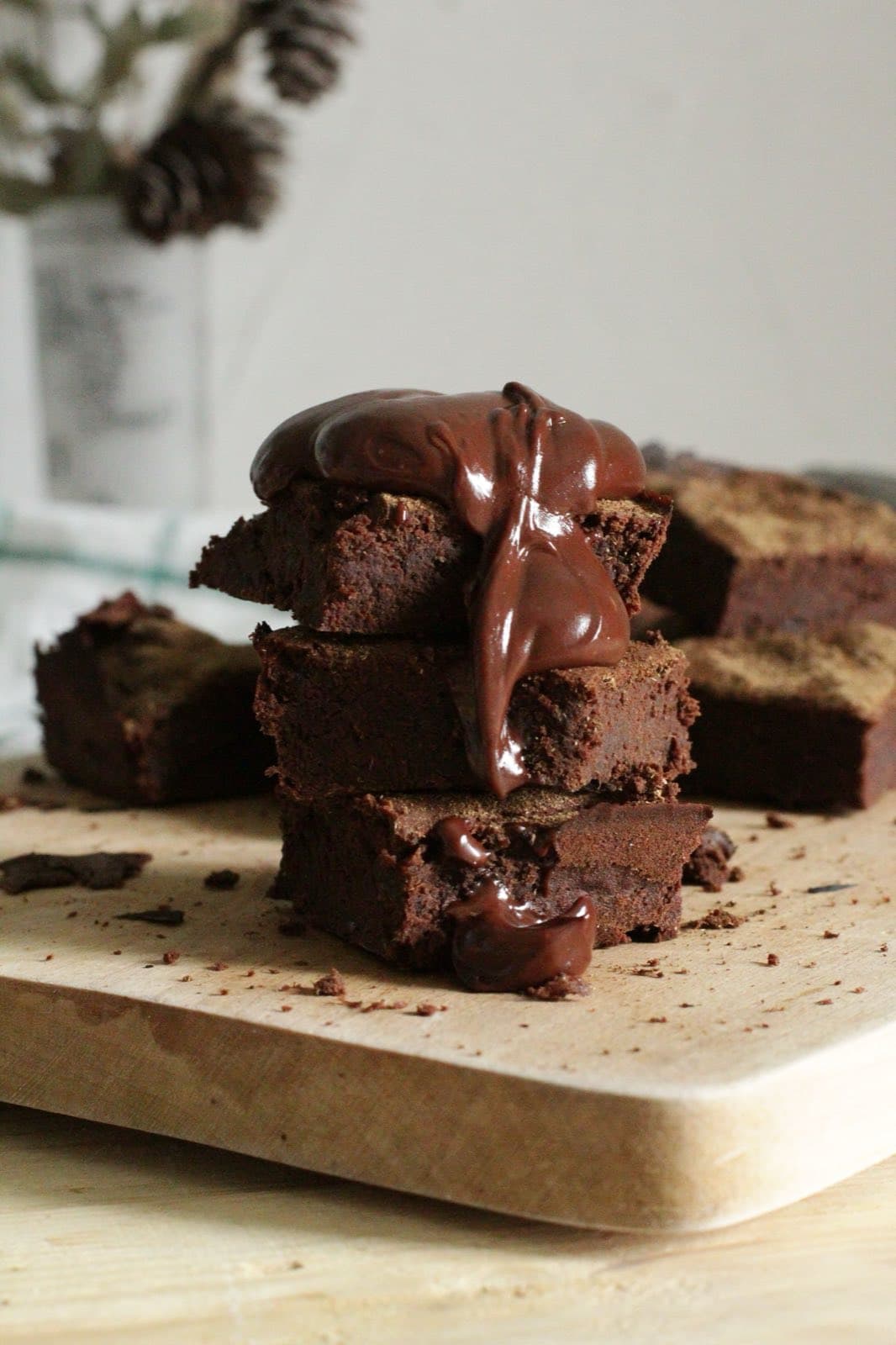
There is one obvious question about letterbox brownies by post: how do they survive? It is a fair thing to wonder. Most bakes would not. The trick of a posted bake is that it was designed for the journey from the very start, and once you understand how that works, the idea stops sounding like a gamble and starts sounding rather sensible. So here is the long answer: how letterbox gifts actually work, and how to order one of my own boxes, posted anywhere in the UK, with Royal Mail postage added at checkout.
What a letterbox gift actually is
A letterbox gift is a present that arrives through the front door with the ordinary post. The box is slim enough to fit a standard letterbox, so nobody has to be home to receive it. There is no signing for anything, and no card on the mat announcing that the parcel now lives at a depot on the far side of town. The gift is simply there on the doormat when the person walks in.
Flowers got there first. Slim boxes of stems have been sliding through British letterboxes for years, and bakers eventually noticed that the same thinking suits anything flat and sturdy that keeps well. Brownies were the obvious candidate. A brownie is happier lying flat in a shallow box than almost anywhere else, which is why letterbox brownies have become the thing people search for in earnest, usually a few days before somebody's birthday and usually from the wrong end of the country.
I bake in Peterborough, in small batches, from a registered home kitchen, using generational recipes passed through the years. My letterbox line covers cakes, brownies and biscuits, designed to post UK-wide as a large letter, and the boxes are on sale online. How the whole thing works is further down.
(a doormat with brownies on it beats a missed-delivery card by some distance)
Why it fits through the door
The important number is 2.5 centimetres. Royal Mail's large letter format takes anything up to 35.3cm long and 25cm wide, provided it is no thicker than 2.5cm and weighs under 750 grams. Everything about a letterbox bake is worked backwards from that slot. The box is shallow and rigid. The bakes sit inside in a single layer, wrapped and packed snugly so nothing slides about between the sorting office and the front door.
The practical consequence is the whole point of the format. A large letter is delivered with the ordinary post, the same way a birthday card would be. It goes through the door whether anyone is home or not. Nobody has to answer a bell or plan their Tuesday around a courier's four-hour window. For a surprise, this matters more than people realise. Half the pleasure of a posted bake is that the person had no idea it was coming, and the format protects the secret all the way to the doormat.
It also makes the sender's job short. You need an address. That is the entire list of requirements. No safe-place instructions, and no hoping a neighbour happens to be in.
The bakes that survive the post, and the ones that never could
Start with what fails. A tall sponge filled with fresh cream is built for a cake stand and a same-day fork. The cream wants a fridge. The sponge bruises if you look at it sternly. Any journey longer than a careful walk across a kitchen will undo it, and that is no flaw in the cake. It is simply the wrong cake for a postbag.
A bake survives the post when it is dense and moist, with a structure that can take a knock. Density means a tight crumb that holds together instead of shattering at the first jolt. Moisture, held in the crumb by sugar and fat, means the bake still eats beautifully days after it left the oven. Structure means it can lie flat in a box, take the journey, and come out the other side looking like itself.
Brownies are the finest travellers baking has ever produced, which is why brownies by post have become the backbone of the whole category in the UK. A proper fudgy brownie is dense by definition and mellows as it sits. My letterbox brownies come in six kinds: classic, double chocolate, triple chocolate, blondies, white-chocolate blondies, and caramel and sea salt.
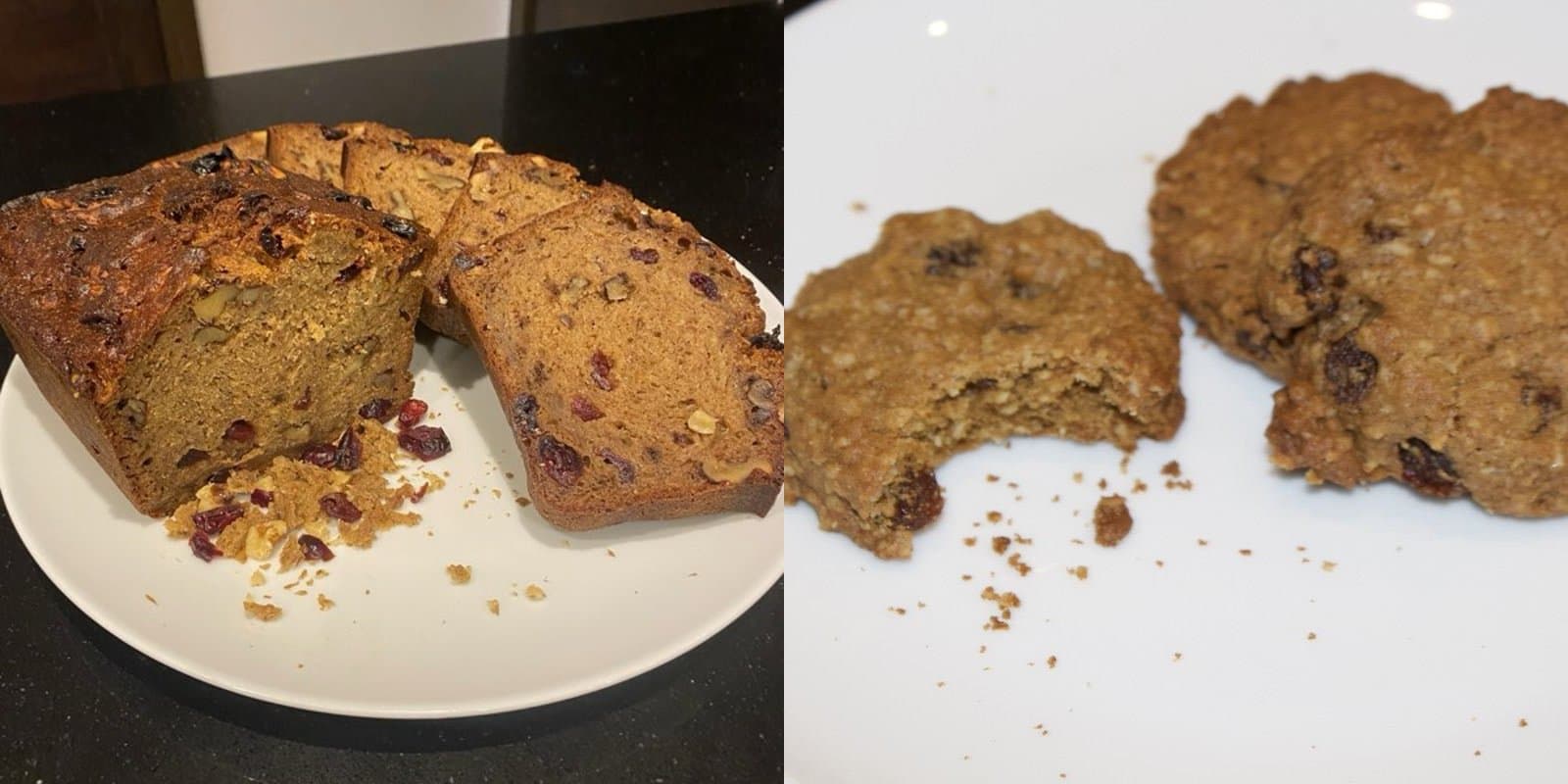
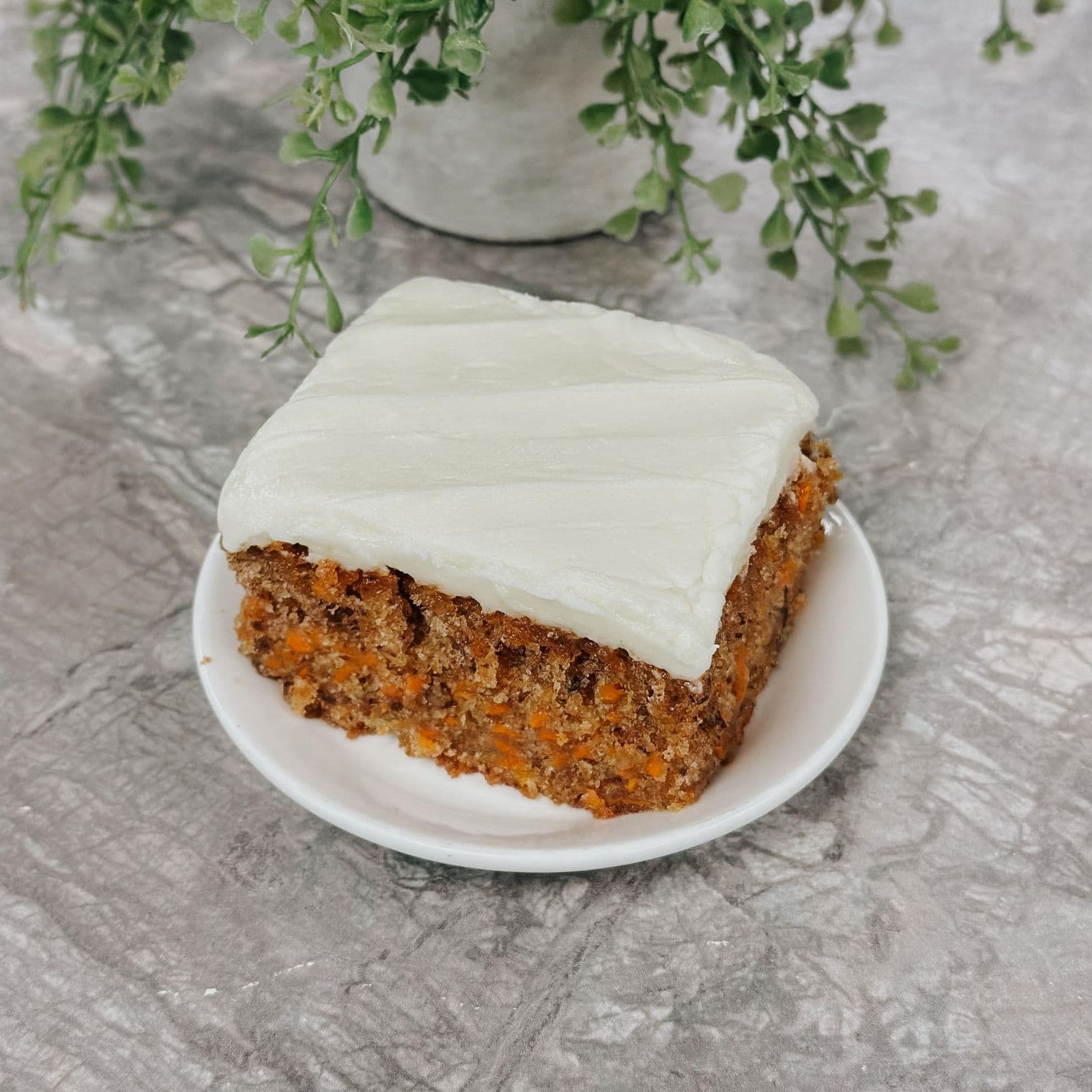
Cakes need choosing with more care, which is why my cake by post is the loaf kind: a sliced lemon loaf cake with fresh zest through the batter and a glaze that soaks in warm, and a banana bread with walnuts, both cut thick and boxed flat. A dense loaf keeps its moisture the way an airy sponge never could, and the flavour deepens rather than fading. Alongside them sit letterbox cookies in five kinds, from butter pecan to double chocolate, with two flavours to a box, and my cookies by post guide covers them in full. All of them are sturdy enough for the journey and better with a pot of tea waiting at the far end.
How freshness actually works
Freshness is not one thing. A croissant has perhaps six good hours in it. A fruit cake has months. Most bakes live somewhere between those two, and a letterbox line is picked from the ones whose best days are still ahead of them when the box is sealed.
A fudgy brownie is the clearest example. It is arguably better on day two than day one, once the crumb has settled and the chocolate has calmed down. Dense cakes behave the same way. A glazed lemon loaf holds its moisture in a manner an airy sponge never could, and a banana bread stays moist for days because the fruit keeps giving water back to the crumb. Post a bake like that and it arrives inside its peak rather than past it.
That is the quiet logic of the whole category. Nothing is being asked to survive beyond its natural life. The journey is simply built into the eating schedule, the way a good greengrocer sells bananas a shade underripe because he knows exactly where they will finish ripening.
The journey itself is short, in any case. A large letter travels like the rest of the mail, which usually means a day or two between postbox and doormat. That window is part of the design. When I say a bake was chosen because it keeps, I mean it was chosen because day two and day three of its life are good days, and the post only ever borrows one or two of them.
Wrapping does the rest of the work. Airtight matters far more than pretty, because staling is mostly a story about moisture escaping. A well-sealed bake keeps its softness to itself until the wrapper comes off at the kitchen table.
(a fresh cream sponge sent second class is a lesson nobody needs to learn twice)
What makes a good letterbox bake
The recipe has to be designed for the format rather than squeezed into it. A slab of celebration cake cut thin does not become a letterbox cake. The bakes that work are the ones chosen because they travel, and everything else follows from that choice.
Ingredients carry more weight than usual, too. There is no towering icing or fresh fruit to distract anyone. What arrives is the bake itself, plain on its own merits, so the bake has to be worth the stamp. I use real butter and real vanilla. The eggs are free-range. The recipes are generational ones, passed through the years, and I bake them in small batches because that is how they come out right.
Then there is the unglamorous part: the label. My kitchen handles all fourteen regulated allergens, nuts included, so no bake of mine can ever be guaranteed trace-free, and I would rather say that plainly than mumble it. Every order goes out with a full ingredient and allergen label, and the detail lives on my allergens page. If you are sending to someone with an allergy, read that page first and ask me anything that is unclear before you order.
How to choose one for someone
Start with the person, and start with allergies. It is a dull first question and it is also the only one that truly matters, particularly when the gift is a surprise and the recipient cannot check a label before you order on their behalf.
After that, read their taste the way you would choose their birthday card. For the friend who orders the same coffee every single time, the classic brownie or the butter cookies will land exactly as intended. For the one who picks the strangest thing on any menu, caramel and sea salt brownies, or the banana bread with walnuts. The sliced lemon loaf suits the tea drinker who claims not to have a sweet tooth. I have written a whole piece on the Letterbox Lemon Cake, from why it tastes sharper than it looks to how the slices are packed, if you would like the detail before you order a box.
Think about the moment as well. A posted bake covers distance, and it suits the friend who moved away or the grandparent you cannot visit this month. It asks nothing of the person receiving it. They do not even have to be in. My guide to thank you gifts by post matches a box to every occasion, from get well soons to new babies. If the person happens to live near me in Peterborough, mind, the letterbox is only one option. A full birthday cake with candles on it might serve the occasion better than anything a postman can carry.
How to order letterbox brownies by post
To send brownies by post, open the letterbox brownies page, choose six for £18 or twelve for £32, pick one kind or two for a half and half box, and choose the day you would like them to land. The rest of the letterbox boxes are on sale too: sliced loaf cakes, brownies, cookies and a baker's choice treats box, each ordered and paid online with Royal Mail postage added at checkout, and posted anywhere in the UK. I am one baker working from a home kitchen, and I bake in small batches because the recipes demand it, so every box is baked for your order rather than pulled off a shelf. If you are comparing options, my guide to letterbox cakes by post in the UK covers prices, postage and what fits the slot. Alongside the boxes, this year my hands are full launching pop-up collection days in Peterborough for November and December. The pop-up menu is short and ordered ahead, then baked fresh for the day, and collection is free.
If you are local
The pop-ups are where to find me in person. The menu is short and ordered ahead, everything baked fresh for the day, and the pies and sausage rolls can go home frozen to bake in your own oven when you want the house to smell like it did the work.
And if you are already thinking about December, the Jamaican rum fruit cake is worth knowing about. The fruit soaks for months before the cake is ever mixed, which is why a freshly baked one is a rare thing to find anywhere, and I have written the whole story of the Christmas fruit cake for anyone who wants to know why. The dates for Christmas ordering are on the Christmas page, and the fruit cake goes first every year. For presents, my guide to letterbox Christmas gifts has the festive boxes.
The short version of everything above is this. A letterbox bake is a category built on honest constraints. It must fit through a slot 2.5 centimetres deep, and it must still taste like somebody meant it. Get both right and a slim parcel on a doormat can do what a phone message never quite manages. If one lands on yours some morning and the kitchen suddenly smells of chocolate, somebody was thinking of you.
Questions people ask
- Can you send brownies by post in the UK?
- Yes. Brownies are among the best bakes to post because they are dense, sturdy and often better on day two. My letterbox brownies go six to a box for £18, packed flat as a Royal Mail large letter that fits through a standard letterbox, and posted anywhere in the UK. Postage is added at checkout.
- How much do letterbox brownies cost?
- A box of six letterbox brownies is £18 and a dozen is £32. The box of six travels by Royal Mail 1st Class as a large letter for £3.60, and the dozen goes as a small parcel for £5.45. DPD next day is also available to mainland UK, priced by weight at checkout.
- What brownie flavours can I send by post?
- There are six kinds: plain, double chocolate, triple chocolate, blondies, white chocolate blondies, and caramel and sea salt. Choose one kind for the whole box, or pick two and it goes out half and half, whether you order the box of six or the dozen.
- Do letterbox brownies fit through the letterbox?
- The box of six does. It is packed flat in a slim box within Royal Mail's large letter limit of 2.5cm thick, so it goes through a standard UK letterbox with the ordinary post and nobody has to be in. The dozen is heavier than a large letter allows, so it travels as a parcel.
- How long do brownies by post stay fresh?
- At their best within five days of arriving, and the best-before date on the label is the one to follow. Fudgy brownies are dense and keep well, and plenty of people think the second day is the better one. Keep them in the box or an airtight tin, somewhere cool and away from radiators.
- Can I send brownies as a gift with a message?
- Yes. Add a message at checkout and I hand-write it on a card in the box, free. There is never an invoice or a price inside a gift, so the person opening it sees only the brownies and your words. You can also pick the day you would like the box to land.
Written by Sploffin, a small-batch bakery in Peterborough. Questions about an order? The FAQ answers most of them.