
What is a Christmas fruit cake, and why does a good one take months to make? A Christmas fruit cake is a dense, dark cake packed with dried fruit and warm spice, baked low and slow so it keeps for weeks. Britain usually dresses it in marzipan and icing. Caribbean kitchens soak the fruit in rum and serve it dark. Mine is the second kind, and the fruit for this year's cake has been soaking since summer.
I bake in small batches from a registered home kitchen in Peterborough, a micro bakery with generational recipes passed through the years. I learned at my gran's side from about twelve, in a kitchen that catered birthdays and weddings, and I was taking my own orders at fifteen. So this is a baker's guide rather than a recipe card: what the cake is, where it came from, how to tell a good one from a tired one, and how to have mine on your table if months of soaking sounds like more patience than December allows. There are cookies at the end, because some presents need to fit through a letterbox.
What is the difference between fruit cake and Christmas cake?
A Christmas cake is a rich fruit cake made for the season. The fruit is heavier, the spice warmer, there is usually spirit in it, and in most British homes it is finished with marzipan and royal icing. Every Christmas cake is a fruit cake. Very few fruit cakes are Christmas cakes.
The difference is mostly one of richness and ceremony. An everyday fruit cake is a teatime loaf with a scattering of sultanas. A Christmas fruit cake is the dense, dark, rather serious relation that turns up once a year and sits on the sideboard like it pays rent there.
Where did the Christmas fruit cake come from?
It started life as the Twelfth Night cake. For centuries the big celebration came on 5 January, and the centrepiece was a fruit-laden cake with a dried bean or pea hidden inside. Whoever found it became king or queen for the rest of the night, which is a better party game than anything involving a paper hat.
That cake began as a sort of bread and grew, over the centuries, into a leavened fruit cake spiced with clove and nutmeg, often with a little brandy in it. Samuel Pepys wrote about the tradition in his diary. Later bakers dressed it with sugar work and royal icing. By the Victorian era the Twelfth Night cake had not disappeared from English tables at all. It had become the Christmas cake we know today.
Is Christmas cake the same as Christmas pudding?
No, though they are close cousins. A Christmas pudding is steamed, eaten hot with custard or brandy butter, and began life as a pottage: a broth of raisins, dried fruit, spices and wine, thickened with breadcrumbs or ground almonds. A Christmas cake is baked, eaten cold, and cut in slices.
The pudding has its own date, too. The Victorians made it on Stir-up Sunday, the fifth Sunday before Christmas, with each family member taking a turn at the spoon for luck. In 2026 Stir-up Sunday falls on 22 November. The name, charmingly, has nothing to do with stirring. It comes from a prayer in the Book of Common Prayer that begins "Stir up, we beseech thee". The pudding simply borrowed a good excuse.
Jamaican rum cake: what it is, and how mine is made
Jamaican rum cake is the Caribbean way with Christmas fruit cake: dried fruit soaked in rum for months, then baked into a dense, dark cake. Jamaica's own tourist board describes the seasonal version as a rich dark fruit cake soaked with overproof rum, made with fruit that has been soaking all year, and often served with a glass of sorrel.
The name gets used for three different cakes, which is where the confusion starts. The first is black cake, the darkest of the family, which gets its colour from burnt sugar known as "browning", poured in just before the cake goes into the oven. The second is a rum-soaked fruit cake, dark and dense, closer in spirit to the British Christmas cake. The third is the golden, ring-shaped sponge with a buttery rum glaze that often travels under the same name, a lovely thing but a different animal entirely. Mine is sold as exactly what it is: a Jamaican rum fruit cake.
The rum matters, so the name matters too. Jamaica has been known for heavier, fuller-flavoured rums for a very long time, and Britannica notes they are typically blended and aged. Rum's story in the Caribbean is also bound up with sugar plantations and the slave trade, and I think a cake that carries the name should say so plainly rather than pretend it came from nowhere.
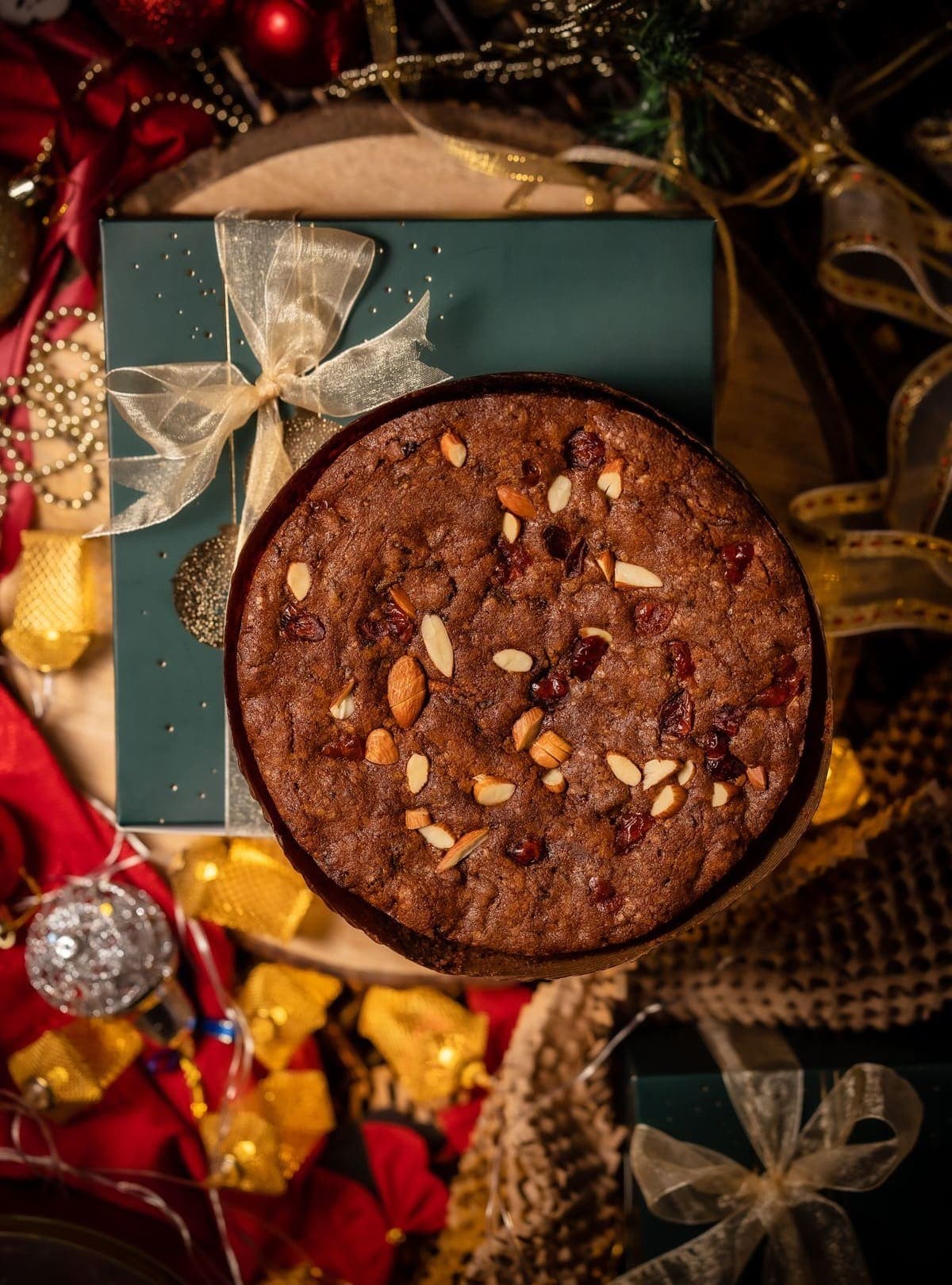
Here is mine. The dried fruit soaks for months in Jamaican rum and cherry brandy, both of them, always. Then it is baked with real butter, free-range eggs and the spices a rum fruit cake has always carried into a dark six inch cake, from my family's Caribbean kitchen. It is never iced. No marzipan, no royal icing, no little plastic robin. The glossy top is the finish, which is the way rum cake has always been cut in Caribbean kitchens.
It comes two ways. The whole Jamaican rum cake is £45 for the six inch, posted as a parcel, by Royal Mail 1st Class anywhere in the UK or DPD next day to mainland UK, or collected free in Peterborough, and it feeds a surprising number of people in thin slices. Or there are rum cake slices that fit through the letterbox: four thick-cut slices of the same cake for £23, boxed flat for the doormat. The slices join the rest of my letterbox gifts from 1 October.
If you would rather skip the soaking, the waiting and the washing up, the Christmas fruit cake is on my Christmas menu, with pre-orders open from 1 October.
(the fruit has been in the rum since summer, and frankly it has had a better few months than most of us)
What alcohol goes in a fruit cake, and does it cook off?
Brandy is the classic British choice, and rum, whisky and sherry all have loyal followers. The Caribbean answer is rum, often overproof, which Jamaica's tourist board puts at at least 57.5% alcohol. Some families add a fortified wine or a cherry brandy alongside. Mine uses Jamaican rum and cherry brandy together.
Does it cook off? Not all of it, and I would rather say so than let anyone assume. In my experience the alcohol never fully bakes out of fruit that has soaked for months; the spirit carries right through the bake. My cake contains alcohol. It is not for children, and not for anyone avoiding alcohol for any reason. If that rules it out for your table this year, the cookie boxes further down make the easier present.
If you are baking an alcohol-free one at home, cold tea or orange juice makes a perfectly nice soak. It just does not make a rum cake.
How far ahead should a fruit cake be made?
The fruit needs the longest head start: weeks at the very least, and months in the Caribbean tradition. The cake itself is best baked a few weeks before Christmas and then left to settle. British bakers traditionally bake early and feed the cake with spirit every week or so until the icing goes on.
My schedule splits the difference. The fruit goes into the rum and cherry brandy months ahead, but the cakes themselves are baked weeks, not months, before Christmas, so they keep their moisture rather than drying on a shelf. Once baked, a rum fruit cake is better after a couple of days of settling, when the crumb firms up and the flavours stop arguing and start agreeing.
The bake is part of the patience, too. Very rich fruit cakes go in at a much lower temperature than ordinary cakes, around 143°C, against more than 200°C for small buns. A low oven and a long bake is what gives the crumb its density without burning the fruit at the edges.
How do you store a fruit cake, and how long does it last?
Wrap a fruit cake in baking paper, then foil, and keep it in an airtight tin somewhere cool and dry. A rich, well-soaked fruit cake keeps far longer than a sponge. Wrapped well, mine keeps for the whole season, and the best-before date is on the label. Rewrap it snugly after every cut so the edge stays moist.
Fruit cake is one of the few cakes that genuinely keeps. The traditional English wedding cake is a fruit cake for exactly this reason: a tier was often saved for a christening, and guests who could not attend a royal wedding were sent their slice of cake through the post. If you would like the same idea on a much bigger day, I offer a rum-soaked fruit cake tier with my wedding cakes, given at least three months' notice.
What are the most common fruit cake mistakes?
Most fruit cake disasters come down to three things: fruit that was not soaked long enough, an oven that was too hot, and a cake that was cut too soon. Each one produces a cake that is dry, pale or crumbly rather than dense, dark and moist.
Short soaking is the big one. Fruit soaked overnight tastes of fruit with a splash of something on top. Fruit soaked for months tastes of the soak all the way through, and it holds its moisture in the crumb for weeks afterwards. There is no shortcut for this, and it is the reason most people run out of time.
Then the hot oven: rush a fruit cake at an ordinary cake temperature and the outside scorches while the middle is still thinking about it. Then impatience: cut on its first day, a fruit cake crumbles, and the same cake a couple of days later slices clean.
Buying a well-matured cake skips all three. That is not modesty, just arithmetic: I started the fruit months ago so you do not have to.
Which Christmas fruit cake is best to buy?
The best Christmas fruit cake to buy is one that was soaked long and baked recently: the soak gives the flavour, the recent bake keeps the moisture. Supermarket cakes are convenient, homemade is the most satisfying and the most time-consuming, and a small-batch bakery sits in the middle: long soak, fresh bake, no four-hour Sunday in your kitchen.
Homemade is wonderful if you started in the summer and have an oven you trust. Supermarket fruit cake is everywhere and it is cheap. A small-batch cake from a named baker costs more because the fruit sat in real spirit for months, the butter is real butter, and the cake was baked for this Christmas and nobody else's.
My honest advice: if you love baking, bake one. If you love the cake more than the process, order one, and spend the saved Sunday on anything that does not involve lining a tin with three layers of paper.
Serve it in thin slices, with strong tea, or with a sliver of sharp, crumbly cheese, which sounds strange until the first bite. This is not a cake to be generous with the knife, so a six inch goes further than people expect. For the general arithmetic of feeding a crowd, my guide to cake portion sizes does the sums.
Christmas cookie gifts that fit through the letterbox
Christmas cookie gifts are boxes of festive biscuits, packed flat and posted, that arrive through the front door like a card does. Sent by Royal Mail, a single box needs nobody home and nobody signs for anything: the present is simply on the doormat when they get in. Mine are baked in Peterborough and posted anywhere in the UK by Royal Mail 1st Class, or sent by DPD next day to mainland UK as a courier parcel on the day you choose, with postage added at checkout.
The format is worked backwards from one slot. A Royal Mail large letter can be up to 35.3cm long, 25cm wide and 2.5cm thick, and weigh up to 750g. Every box is shallow and rigid, the biscuits lie in a single layer, and that is the trick. I wrote a longer piece on how letterbox cake by post actually works if you want the full reasoning.
Giving decorated biscuits is an old British habit, by the way. Gingerbread "fairings" were moulded, decorated biscuits sold at fairs, and eating one was thought to bring good luck. In 1833 the future Queen Victoria gave her spaniel, Dash, two bits of gingerbread for Christmas, which I think is the finest gift receipt in royal history.
My Christmas cookie gifts are three festive boxes, each £18, each flat enough for the letterbox.
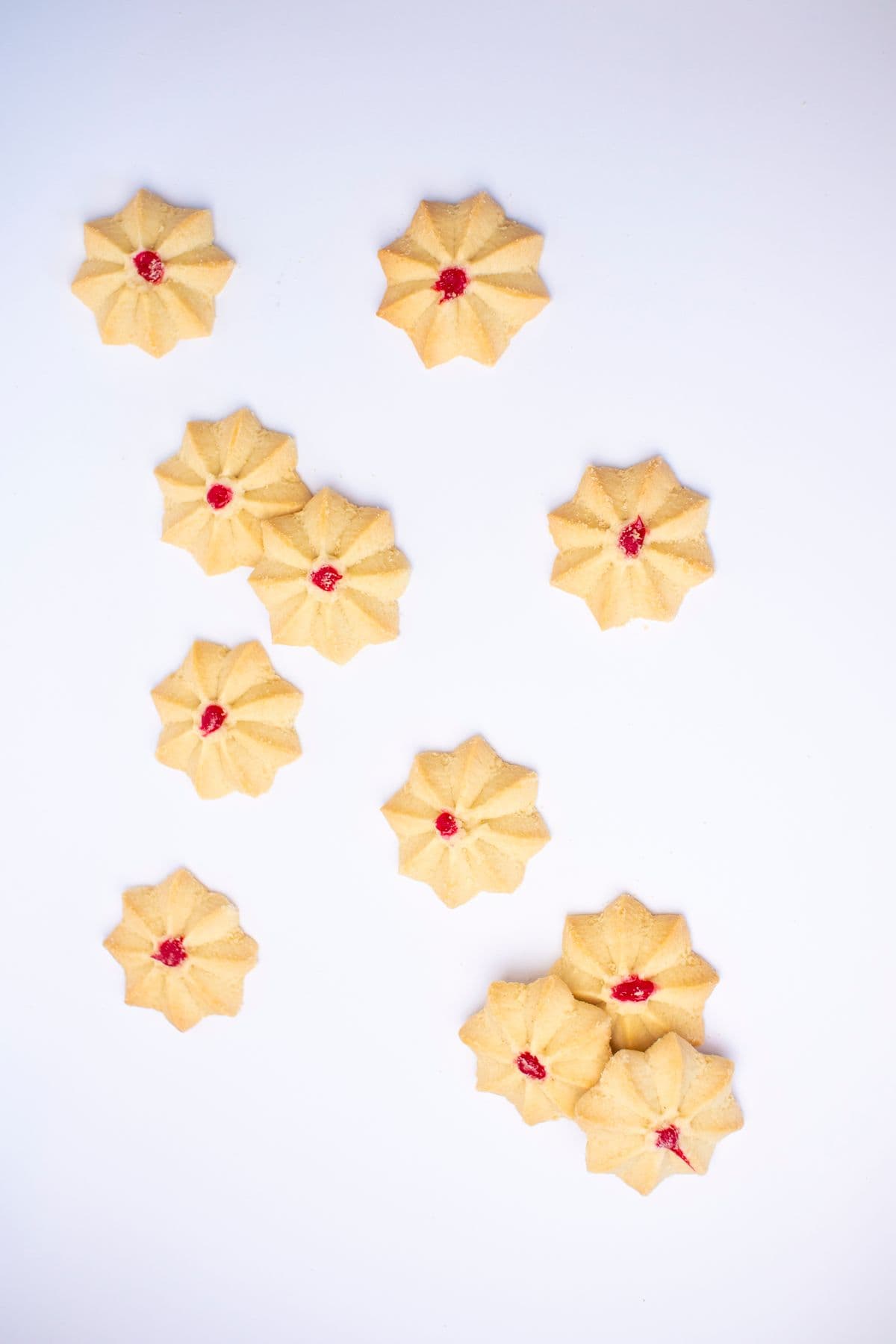
The vanilla butter cookies with glacé cherries are piped by hand, rich with butter and vanilla, each finished with a glacé cherry pressed on top. There are 25 to a box, laid five by five, which works out at about 72p a cookie. This is the tin-on-the-sideboard biscuit, the one that vanishes while everybody claims they have only had two.
The snowflake gingerbread cookies are gingerbread cut into snowflakes and iced by hand, eight to a box, each about 8cm across. They are the box that gets photographed before anyone is allowed to eat it.
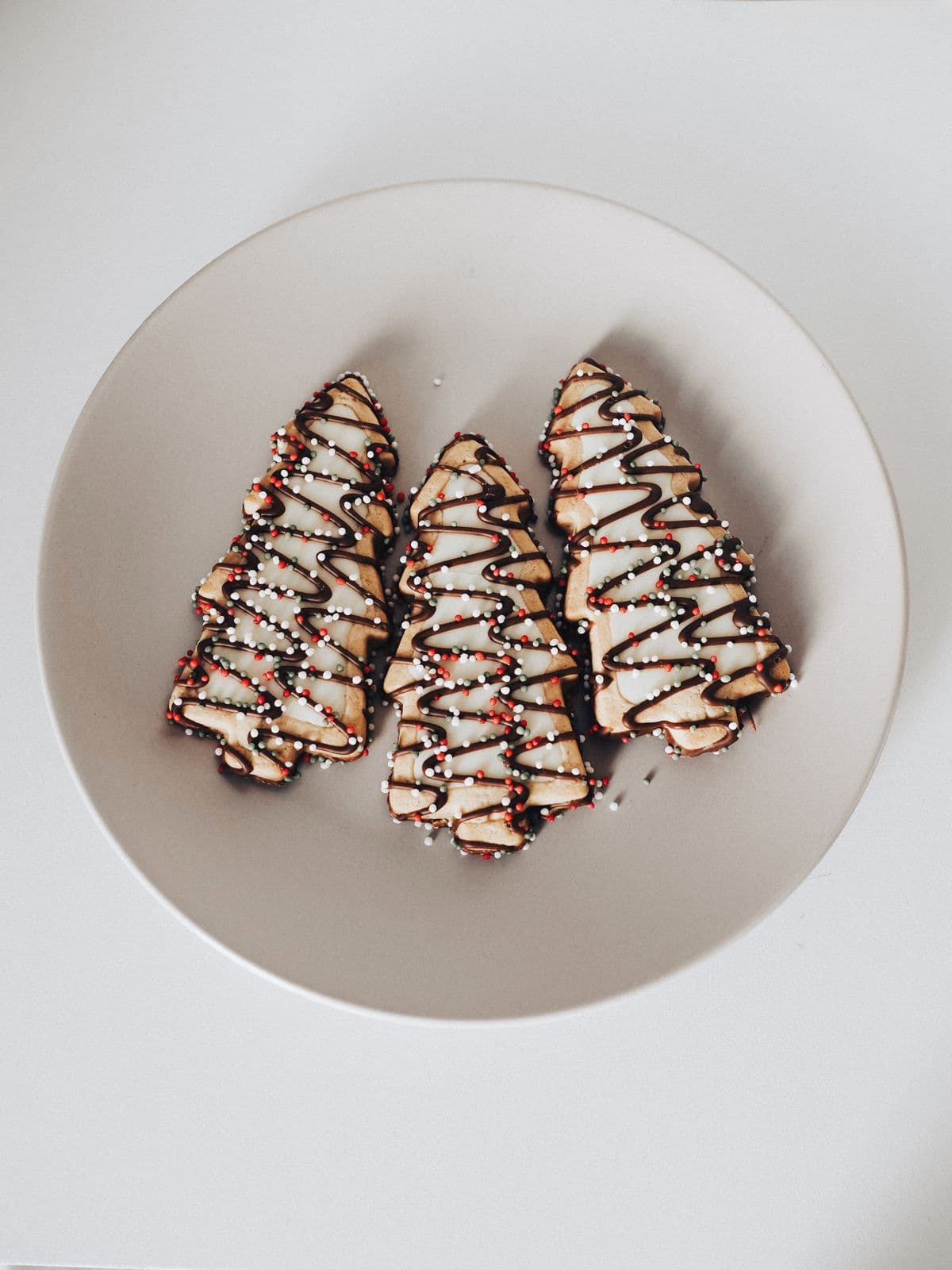
The Christmas tree matcha cookies are the unusual one. The green comes from matcha in the dough, so it runs all the way through the tree rather than sitting on top as food colouring. There are sixteen in a box, nested head to toe in two rows. They suit the friend who already owns every candle and scarf in the shops.
Letterbox Cookies: the gift that is not only for Christmas
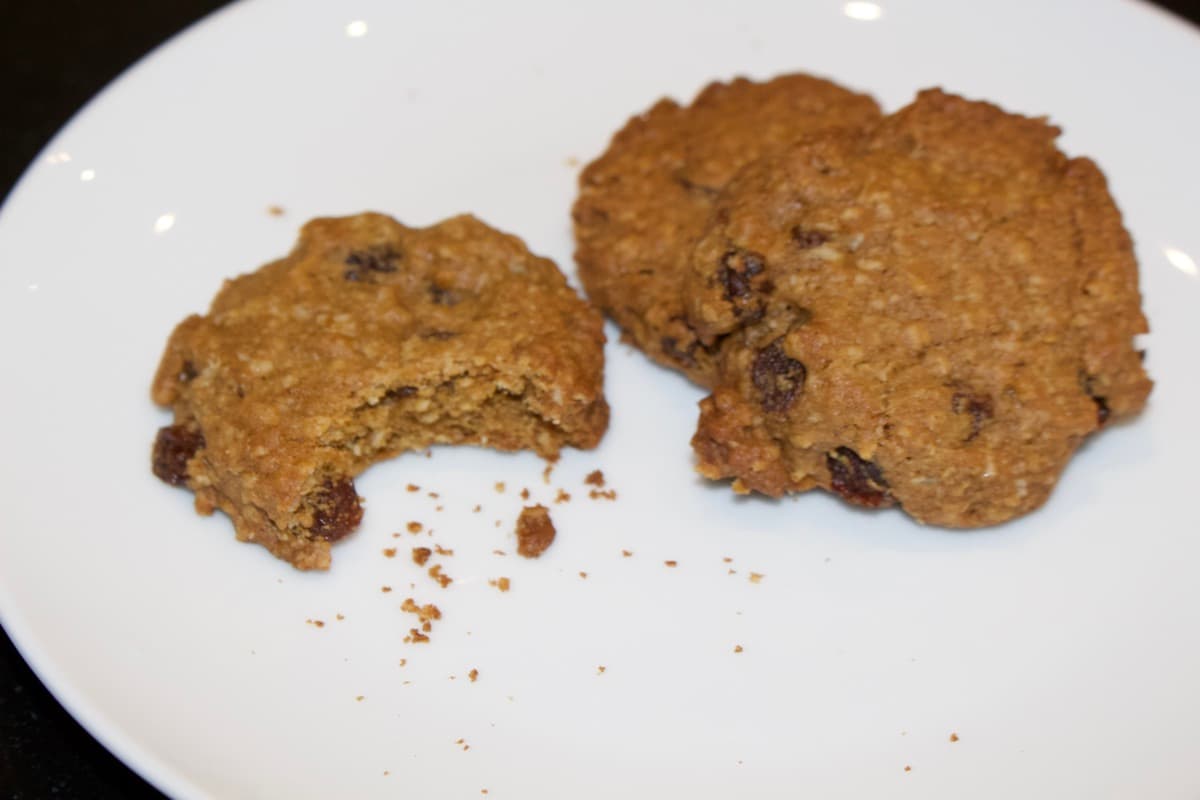
Not everyone wants snowflakes. Some people want a good chocolate chip cookie, and they are right to. That is what my Letterbox Cookies are for: six cookies to a box, all one kind or half and half of two, from five flavours. There are butter cookies, short enough to break clean; butter pecan with toasted pecans through a brown-butter dough; chocolate chip with proper chunks and a chewy middle; double chocolate; and oatmeal and raisin, with the oats still doing something.
They are on sale all year, as good a stocking filler as a January thank-you. Cookies post better than almost anything else, as every biscuit tin your gran ever sent will tell you. If you want a bigger box for a household, the dozen is heavier than a large letter allows and travels as a parcel instead.
Every box, Christmas or not, is packed flat in a single layer with a full ingredient and allergen label and a best-before date. If you add a gift message at checkout, your words go on a card tucked into the box, and nobody ever finds an invoice inside a present from me.
Which Christmas cookie gift suits whom?
Match the box to the person, not the price. For the traditionalist, the glacé cherry butter cookies. For the one who photographs everything, the gingerbread snowflakes. For the friend who has everything, the matcha trees. For the fussy eater or the chocolate loyalist, a box of Letterbox Cookies in their two favourite flavours.
For an office or a big family, the glacé cherry box goes furthest. For a teacher, a neighbour or a Secret Santa, a single festive box sent by Royal Mail slides through the letterbox with nobody needing to be in. And for the rum lover, the Jamaican rum fruit cake slices make a grown-up cookie alternative, four slices flat in the same kind of box. If you are sending to several people, place one order for each address, each with its own gift message, and for a bigger gifting run, email me and I will sort the lot with you. By Royal Mail, every box travels on its own. By DPD, two or more Christmas boxes to the same address travel together as one parcel. Letterbox Cookies are an everyday bake, so in the same order they travel as their own parcel, on their own day, with their own postage.
Order your Christmas cookie gifts early rather than late: I bake a limited number, and the earlier the order, the more choice of date you get. The festive boxes are on the Christmas menu, and the Letterbox Cookies are ready to order now.
A plain word on allergens
This one belongs in every Christmas conversation. UK food law names 14 major allergens, and Christmas baking tends to collect several of them at once: cereals containing gluten, eggs, milk, tree nuts, and sulphur dioxide and sulphites. Everything I make is baked in a home kitchen where all 14 major allergens are present, including nuts, so nothing can be guaranteed free of traces. The butter pecan cookies contain pecans, and the fruit cake contains alcohol.
Every order carries a full ingredient and allergen label. Read my allergen information before you order, particularly when the gift is a surprise and the person cannot check for themselves, and if anyone has a severe allergy, talk to me first.
Ordering for Christmas: the dates
Christmas pre-orders are open from 1 October. Everything is baked and sent from 1 November, and last orders close on 18 December at 11:59pm. You choose roughly when you would like it at checkout. By Royal Mail, that date is the day I aim for and Royal Mail sets the exact day; by DPD, it arrives on the day you pick. Either way, the earlier you order, the calmer your December.
There are two ways to get it. Collect it free in Peterborough, or have it posted. By Royal Mail 1st Class, anywhere in the UK, the cookie boxes and rum cake slices go through the letterbox as large letters and the whole fruit cake goes as a small parcel. By DPD next day, to mainland UK, a fruit cake and Christmas cookie boxes going to the same address travel together in one box. Everything is on the Christmas menu, with the dates set out plainly.
If you are in Peterborough
Collection is free, and it means your fruit cake never sees the inside of a van. I am running pop-up collection days in Peterborough through November and December, with the menu ordered ahead and baked for the day. And if the table needs something lighter, my piece on the UK's favourite cupcake flavours has ideas.
Put simply: a good Christmas fruit cake is mostly patience, and a good Christmas cookie gift is mostly a box that fits the letterbox. I have done the waiting for you. The Christmas fruit cake is on the menu, the festive cookie boxes post from 1 November, and the Letterbox Cookies are ready to order now. My kitchen smells of rum until January. It is a taste of home, and there is a slice with your name on it.
Questions people ask
- What is the difference between fruit cake and Christmas cake?
- A Christmas cake is a rich fruit cake made for the season, with more fruit, warmer spice and usually some spirit, and in most British homes it is finished with marzipan and royal icing. An everyday fruit cake is lighter and plainer. Caribbean Christmas fruit cakes, like my Jamaican rum fruit cake, are soaked in rum and served un-iced.
- Is Jamaican rum cake the same as black cake?
- Not quite. The name covers three cakes: black cake, the darkest of the family, coloured with burnt-sugar "browning"; a dense, dark rum-soaked fruit cake; and the golden ring-shaped sponge with a rum glaze. Mine is a Jamaican rum fruit cake, its fruit soaked for months in Jamaican rum and cherry brandy, and it is never iced.
- Does the alcohol cook off in a rum fruit cake?
- No, not completely. In my experience the alcohol never fully bakes out of fruit that has soaked in spirit for months, so I always assume it stays. My Jamaican rum fruit cake contains alcohol, so it is not suitable for children or for anyone avoiding alcohol. The Christmas cookie boxes are the easier present for those tables.
- How far in advance should a Christmas fruit cake be made?
- The fruit needs the longest head start: weeks at least, and months in the Caribbean tradition. The cake itself is best baked a few weeks before Christmas and left to settle for a couple of days before cutting. My fruit soaks from summer, and the cakes are baked weeks rather than months ahead so they keep their moisture.
- Can you send Christmas cookies by post in the UK?
- Yes. My Christmas cookie gifts and the six-cookie box of Letterbox Cookies are packed flat to fit a Royal Mail large letter, and the box of twelve goes as a small parcel. At checkout you choose Royal Mail 1st Class, anywhere in the UK, where each box travels on its own, or DPD next day to mainland UK, where Christmas boxes to one address travel together as one parcel on the day you pick. Postage is added at checkout.
- When is the last day to order Christmas bakes from Sploffin?
- Christmas pre-orders open on 1 October, everything is baked and sent from 1 November, and last orders close on 18 December at 11:59pm. I bake a limited number, and the fruit for the rum cake was set soaking months ago, so the batch is finite. Order early for the widest choice of dates, for collection or post.
- Can I send a Christmas cookie gift to several people?
- Yes. Add a gift message at checkout and it is hand-written on a card tucked into the box, free, with no invoice inside the present. Place one order for each address, each with its own message, and for a bigger gifting run, email me and I will sort the lot with you. Every box carries a full ingredient and allergen label.
Written by Sploffin, a small-batch bakery in Peterborough. Questions about an order? The FAQ answers most of them.