
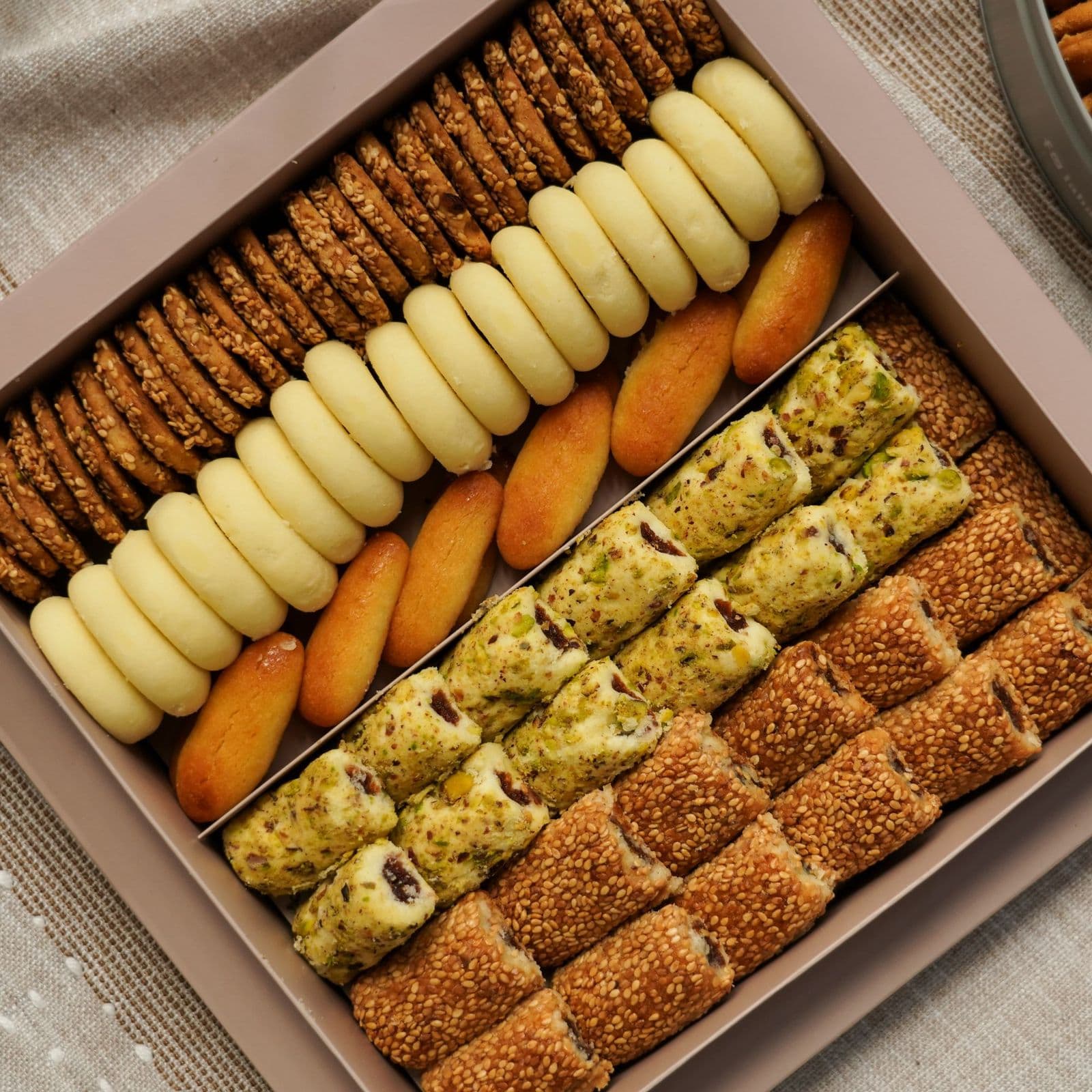
A Letterbox Lemon Cake is four thick-cut slices of lemon loaf, sharper than they look, packed flat in a slim box that slides through a standard UK letterbox so nobody has to be in. Mine is £18 a box, posted anywhere in the UK, and you pick the day you would like it to land. It is the one I suggest for the tea drinker who claims not to have a sweet tooth. Below is everything worth knowing before you send one: what is in the box, how a lemon loaf cake differs from a lemon pound cake and a lemon drizzle, how it travels and how long it keeps.
I bake alone, from a registered home kitchen in Peterborough, in small batches, from generational recipes, and everything is baked to order. When I chose which cakes could go by post, I wanted ones that would arrive at their best rather than simply survive the trip. A dense lemon loaf is exactly that kind of cake. An airy sponge would not thank you for the journey. A lemon loaf cake, glazed while warm and cut thick, is built for it.
If you already know who it is for, the Letterbox Lemon Cake page has everything you need: one box of four slices at £18, Royal Mail 1st Class or DPD next day chosen at checkout, postage added at checkout, and you pick the day you would like it to land.
What is a Letterbox Lemon Cake?
A Letterbox Lemon Cake is a lemon loaf cake that has been sliced and boxed to be posted through the door. Mine is four thick-cut slices of lemon loaf in a slim box, £18, sent anywhere in the UK.
The product page calls it lemon loaf cake by post, sliced for the letterbox, and that is the whole idea in one line. Fresh lemon zest is creamed into the batter at the very start, and a lemon glaze goes on while the loaf is still warm so it soaks in rather than sitting on top. The result is dense and moist, sharper than it looks, and better on day two.
Every box carries a full ingredient and allergen label with a best-before date. If it is a gift, you can add a message at checkout, and no invoice goes inside, so nothing in the box tells them what you spent. There is one size for now, which saves anybody agonising over the choice.
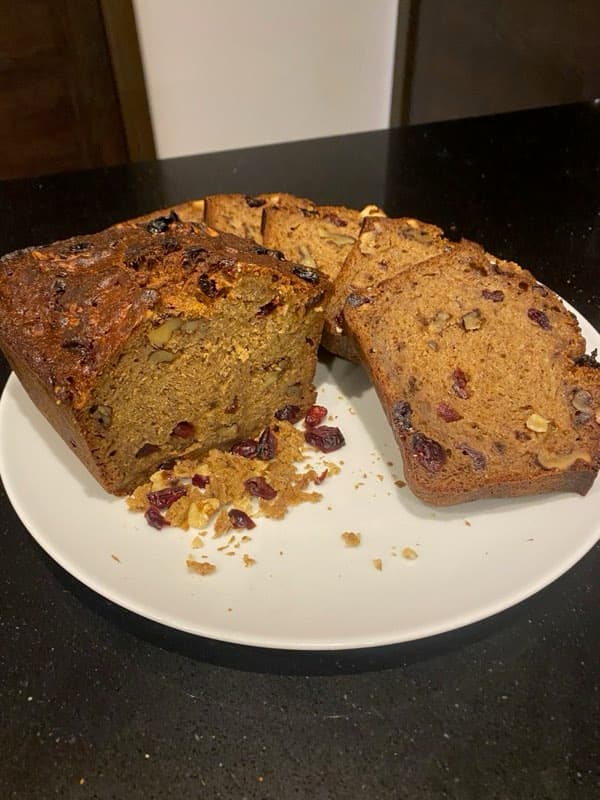
The slices in that photo come from a different loaf, but they are cut the way the letterbox slices are: thick, so each one is a proper piece of cake rather than a polite sliver.
Does it fit through a standard UK letterbox?
Yes. The box is slim and designed around the standard UK letterbox slot, and the slices are packed flat in a single layer so they lie level inside it.
When it goes by Royal Mail it travels as a large letter, so it has to sit within Royal Mail's own limits. A UK Large Letter can be at most 35.3cm long, 25cm wide and 2.5cm thick, and weigh up to 750g. That thickness is the number that shapes everything. It is why the cake is sliced rather than sent whole, and why the slices sit side by side instead of stacked.
A whole loaf would have to go as a parcel. Four flat slices go through the door and wait on the mat for whoever lives there, which is the entire charm of a letterbox gift.
Why is a lemon loaf cake better on day two?
Because a dense, rich lemon loaf cake holds on to its moisture, and a glaze that goes on warm soaks into the crumb. Mine is better on day two, and that is exactly why it suits the post.
Start with the sharpness. According to Britannica, the outer peel of a lemon is dotted with oil glands, while the white pith beneath is nearly tasteless. The zest is where the flavour lives, so I cream it into the batter at the start, and the lemon runs right through the loaf rather than hiding in the topping. That is why it tastes sharper than it looks.
Then the density. Britannica describes the creaming method, in which fat and sugar are creamed together, the egg is beaten in and the flour is folded through, as the one used when the fat is half or more of the flour by weight, producing rich cakes. That richness is the close crumb you want in a good lemon loaf cake, and it is the opposite of a light, open sponge.
Finally, keeping. Staling is not only a matter of drying out. Britannica notes that the crumb can firm even without any appreciable drying, and that the firming is especially noticeable in bread and other low-density, lean bakes. A dense, glazed lemon loaf sits at the other end of that scale, which is why I am happy to post it and happy to say the second day is the better one.
(if you are the sort who eats the glazed edge first, you are among friends)
What is a lemon pound cake, and how is it different from a lemon loaf cake?
A lemon pound cake is a dense lemon cake in the pound cake tradition, named for its recipe, while a lemon loaf cake is named for its tin. The two overlap, so one cake can easily be both.
Pound cake takes its name from its original recipe, which used a pound each of its four ingredients: sugar, eggs, flour and butter. Equal weights of four things, simple enough to carry in your head. English cooks were working to much the same proportions a long time ago. An 1822 recipe for Queen Cakes by Maria Eliza Rundell, held in the University of Reading's Special Collections, calls for a pound each of flour, sugar and currants, a pound of butter and eight eggs, with the batter beaten for an hour.
(an hour of beating by hand, which rather puts a stand mixer in perspective)
A loaf cake is simply a cake baked in a loaf tin, and Britannica's entry on cake notes that shortened cakes can be baked in loaf pans. So a lemon pound cake can come out of a loaf tin, and a lemon loaf cake does not have to follow the pound rule. What the good ones share is density and a proper hit of lemon.
My lemon pound cake is a Christmas limited edition: a lemon cranberry pound cake with lemon icing. It is a dense lemon pound cake with cranberries baked through it, finished with lemon icing, and it comes as four thick slices boxed flat to fit through the letterbox, for £18. Christmas pre-orders open on 1 October 2026 and close at the end of 18 December, with delivery and collection from 1 November. The rest of the festive menu is on my Christmas page.
And lemon drizzle? In summer 2024, National Trust cafes and tearooms sold 1,794,000 portions of cakes and bakes, and lemon drizzle was one of the top five once scones were set aside. I have written about how lemon drizzle also tops the UK's cake searches in Britain's favourite cupcake flavours. A lemon drizzle is named for its finish rather than its recipe or its tin: my lemon loaf cake is what most people mean by lemon drizzle, with fresh zest through the batter and a lemon glaze soaked in while it is still warm, so if a lemon drizzle by post is what you are after, the letterbox slices are it.
How is it posted, and does anyone need to be in?
Not for the letterbox route. You choose at checkout between Royal Mail 1st Class as a large letter, anywhere in the UK, and DPD next day on a chosen day to mainland UK. Either way, you pick the day you would like it to land.
Royal Mail says 1st Class aims to deliver the next working day, Saturdays included. The word to notice is aims: it is Royal Mail's target rather than a promise. Postage for either is priced at checkout, so you see the full cost before you pay.
Sending it as a present? Add your gift message at checkout. No invoice goes into a gift, so the person opening it gets the cake and your words, not the receipt. I explained the whole journey, from box to doormat, in how letterbox brownies and cake by post actually work.
Ready to send one? Open the lemon loaf cake page, add a box of four slices at £18, choose Royal Mail 1st Class or DPD next day, pick the day it should land and write your message. Postage is added at checkout.
How long does it keep once it arrives?
Every box carries a best-before date on its label, so the answer for your box is printed right on it.
On UK labels, best before dates relate to quality, while use-by dates relate to safety. After a best before date, food is usually still safe to eat but may not be at its best. So the date on my label is about how good the cake is, not whether it is safe, and eaten by that date it will be as I meant it.
Because it is better on day two, there is no need to finish all four slices the moment the box lands, although I cannot promise anyone in the house will wait. Four thick slices make a treat for one or a tea for two. If you are feeding a crowd instead, my guide to cake portion sizes does the arithmetic for bigger occasions.
What allergen information comes with it?
Every box has a full ingredient and allergen label. My kitchen handles all fourteen major allergens, so nothing I bake can be guaranteed free of traces, and if you are ordering for someone with an allergy, please read my allergen information first.
That label is not a courtesy. UK food law requires 14 allergens to be declared, and when food is sold online, allergen information has to be given twice: before the purchase is completed and again when the food is delivered. The label in every box covers the second of those.
What other letterbox gifts are there?
Banana bread with walnuts, brownies, cookies and a baker's choice treats box go through the letterbox too, and the whole line is on my letterbox gifts page.
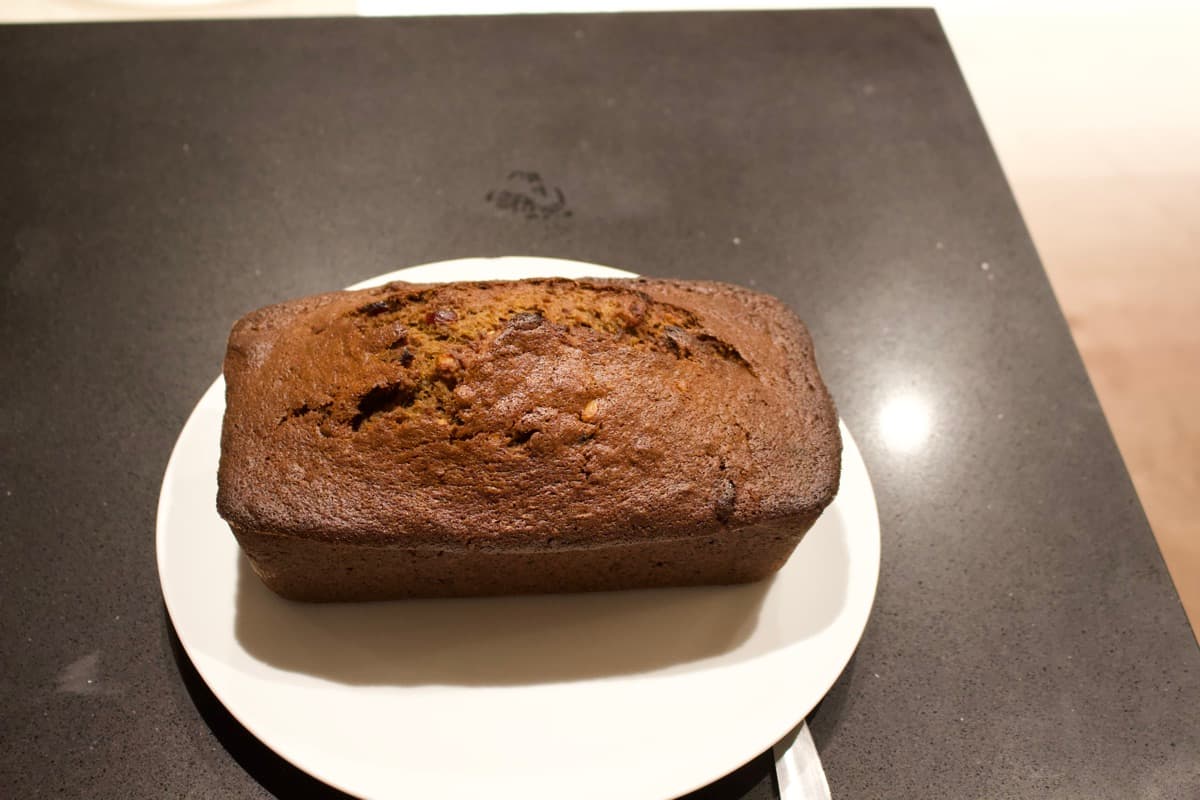
If they prefer something mellower, the banana bread with walnuts is £18 for four thick slices and does contain walnuts. For chocolate people, letterbox brownies are £18 for six or £32 for twelve, and letterbox cookies come in five kinds at £18 for six. If you cannot decide, the baker's choice treats box is £18 for twelve pieces that I pick from across the letterbox line.
If lemon is the whole point and the occasion is bigger, my lemon cupcakes are lemon sponge with a spoon of lemon curd in the middle and lemon buttercream on top. They come in boxes of twelve by DPD courier, not through the letterbox, so they suit a party table rather than a doormat.

How do I order a Letterbox Lemon Cake?
Go to the Letterbox Lemon Cake page, add a box of four thick slices at £18, choose Royal Mail 1st Class or DPD next day, pick the day you would like it to land and add a gift message if it is a present. Postage is added at checkout.
That is all there is to it. The zest goes in at the start, the glaze goes on warm, the slices are cut thick and laid flat, and the box does the rest. Somebody you are fond of comes home to lemon loaf cake on the mat, sharper than it looks and better tomorrow. I would like to bake it for them.
Questions people ask
- Can I order a letterbox cake in the UK?
- Yes. My Letterbox Lemon Cake is four thick slices of glazed lemon loaf in a slim box, £18, ordered online and posted anywhere in the UK by Royal Mail 1st Class, or by DPD next day to mainland UK. You pick the day you would like it to land, add a gift message if it is a present, and postage is added at checkout.
- Does someone need to be in to receive a letterbox lemon cake?
- Not for the letterbox route. The slim box goes through the door by Royal Mail 1st Class as a large letter, so nobody has to be home to take it in. If you would rather use a courier, DPD next day delivers on a chosen day to mainland UK. Either way you pick the day you would like it to land, and postage is added at checkout.
- How long does a letterbox lemon cake last after delivery?
- Every box has a full label with a best-before date, so the answer for your box is printed on it. On UK labels a best before date is about quality rather than safety. The lemon loaf is dense and moist and better on day two, so there is no need to eat all four slices the moment it arrives.
- What is the difference between lemon pound cake and lemon loaf cake?
- The names describe different things. Pound cake is named for its original recipe, a pound each of sugar, eggs, flour and butter, while a loaf cake is named for its tin, so one cake can be both. My Letterbox Lemon Cake is a glazed lemon loaf, and my Christmas lemon cranberry pound cake with lemon icing is its pound cake cousin.
- Can I choose the delivery day and add a gift message?
- Yes to both. At checkout you choose Royal Mail 1st Class or DPD next day, pick the day you would like the box to land, and see the postage priced there. You can add a gift message too, and no invoice goes inside a gift, so the person opening it sees the cake and your words rather than the price.
- What is the secret to a good lemon loaf?
- For me it is lemon in two places. Fresh zest is creamed into the batter at the very start, when it gives up the most flavour, and a lemon glaze goes on while the loaf is still warm so it soaks in rather than sitting on top. That keeps a dense loaf moist and sharper than it looks, and it is better on day two.
Written by Sploffin, a small-batch bakery in Peterborough. Questions about an order? The FAQ answers most of them.